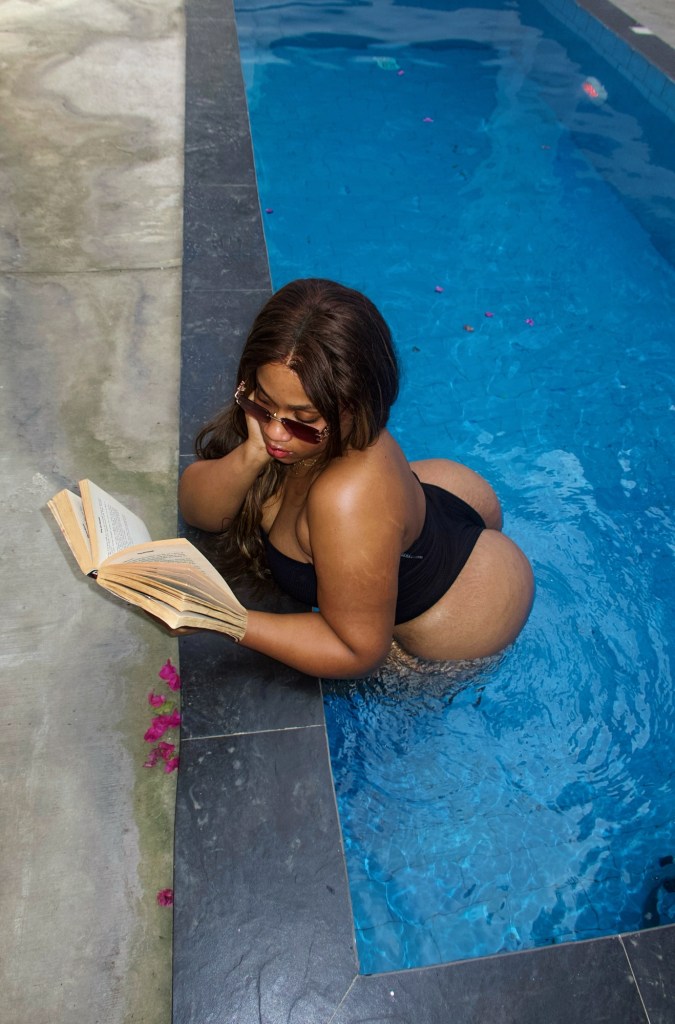
Lately I have been thinking about a phrase we all heard growing up.
You know the one.
“Leave something to the imagination.”
It is one of those statements people say so casually that no one really stops to question it. It shows up in conversations, in comments under photos, in advice passed down from older generations.
And for some reason, it has never quite sat right with me.
Most of the time, the phrase appears when a woman is wearing something that reveals more skin than society seems comfortable with. Be it a short skirt, cleavage, a backless dress, bare legs.
And almost immediately someone says, “Why don’t you leave something to the imagination?”
At first it sounds harmless, almost polite, like a gentle reminder about elegance or mystery.
But the more I think about it, the stranger it starts to feel. Because what exactly are we being asked to leave to the imagination?
If I decide to wear something revealing, I already understand what comes with that decision. I know people will look. I know attention will follow and I know that when you step outside wearing something that shows parts of your body, people will notice.And so, if I am choosing to dress that way, it means i am aware of that. I am comfortable with it.
But when someone tells a woman to “leave something to the imagination,” what they are really suggesting is that it would be better for her to cover up so that people can imagine what is underneath instead.
And that is the part that has always felt so strange to me.
Because the phrase is often presented as modest advice, but underneath it is the assumption that other people are entitled to imagine your body anyway, whether you reveal it or not.
When you sit with that idea long enough, it becomes really uncomfortable.
Because it subtly places responsibility on women’s clothing instead of on people’s behavior. It suggests that women must manage other people’s thoughts simply by adjusting what they wear.
Hide this! Cover that! Reveal less! And yet the imagination the phrase refers to is still there, still active, still happening without permission.
Which raises an interesting question. Why is the burden always placed on women’s clothing rather than on how people choose to think about women’s bodies? Why are women asked to hide themselves so that someone else’s imagination can run freely?
The more I reflect on it, the more I realize that the phrase carries a quiet contradiction.
If a woman shows her body, she is criticized for revealing too much. If she covers her body, she is still imagined. Either way, the conversation centers on controlling her. So maybe the real issue was never how much of a woman’s body is visible.
Maybe the deeper issue is the assumption that her body is open for public commentary at all.
Lately I have been paying more attention to the ideas we repeat without questioning.
Some of them sound harmless on the surface. But when you slow down and really examine them, you start to see the deeper assumptions underneath.
And sometimes you realize that certain phrases were never really about elegance or mystery.
Sometimes they were simply about control.
Cassie 🌸

 Just Being Cassie
Leave a reply to Anonymous Cancel reply